
check out
US /tʃɛk aʊt/
UK /tʃek aut/
- Phrase
- Phrasal Verb
- To find out information about something
- To take books out of a library
A1Morefor example
US
UK
- Phrase
- As an illustration or instance.
in the moment
US
UK
- Phrase
- At the present time; now.
- Spontaneously; without prior planning or consideration.
A1Morelook at
US /lʊk æt/
UK /luk æt/
- Phrasal Verb
- To use your eyes to focus on something
- To focus your eyes on something carefully
A1Moreobject
US /ˈɑbdʒɪkt/
UK /'ɒbdʒɪkt/
- Noun (Countable/Uncountable)
- Something you can see or touch, but is not alive
- Goal or purpose of a particular plan or activity
- Verb (Transitive/Intransitive)
- To disagree; to protest against an idea or plan
- To state one's reason for disagreement
A2TOEICMoretalking about
US
UK
- Phrasal Verb
- To discuss a particular topic.
- To be constantly mentioning or bringing up a subject.
A1Morethink of
US /θɪŋk ʌv/
UK /θiŋk ɔv/
- Phrasal Verb
- To look on as (being something specific); consider
- To consider or remember something.
- Verb (Transitive/Intransitive)
- To imagine or call something to mind
A1Moreused to
US /juzd tu/
UK /ˈju:st tə/
- Adjective
- Did regularly before, but don't do now
- Auxiliary Verb
- Have done before, but do not do now
A1More
Vocabulary
- look at: To use your eyes to focus on something
- for example: As an illustration or instance.
- think of: To look on as (being something specific); consider
- check out
- talking about: To discuss a particular topic.
- used to: Did regularly before, but don't do now
- in the moment: At the present time; now.
- situation: Place, position or area that something is in
- e: Fifth letter of the English alphabet
- improve: To make, or become, something better
- sentence: (Of a judge) to decide the punishment of
- subject: The person, thing, or idea that is being discussed, described, or studied.
- give: Degree of flexibility in something, a material
- describe: To tell the appearance, sound, smell of something
- object: Something you can see or touch, but is not alive
- ride: Machine at an amusement park for riding on for fun
- verb: Word that expresses an action or state
- run: To depart or travel according to a schedule
- preposition: Word such as 'at' 'on' etc. showing position/time
- noun: The subject or object of a sentence
- interested: Having had your attention taken; curious
- wake: To cause to become more energetic or attentive
Get the full experience in the app
Learn anywhere with detailed sentence and usage analysis
01:03
She took a brave step forward, leaving behind her comfort zone to chase her dreams.
Vocabulary
- brave
adj. Having courage
- comfort zone
phr. A familiar situation where one feels safe
Explanation
a brave step is a noun phrase, where brave is an adjective modifying the noun step, meaning "a courageous step".
forward is an adverb modifying step, meaning "ahead".
The whole phrase serves as the object, answering the "what" of took (verb) — she took a brave step forward.
Get the full experience in the app
Look up words anytime with pronunciation, part of speech, and usage
brave
US/brev/
UK/breɪv/
adj.Brave
v.t.To bravely face
A2 Elementary
Get the full experience in the app
Practice speaking anytime and get instant pronunciation feedback
Try this speaking exercise.
Try practicing with this sentence.
80
0
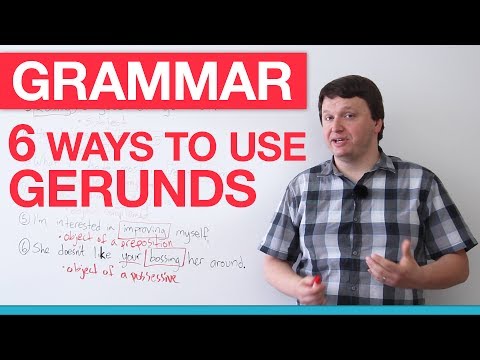
青云 posted on 2013/12/06Ever get confused about when to use gerunds? This fun grammar lesson breaks down six essential ways you can use them, from simple sentence structures to tricky prepositional phrases! You'll pick up clear explanations and examples to boost your English confidence.
Learn this video on the APP!
The VoiceTube App has more in-depth practice for videos!