
above all
US /əˈbʌv ɔl/
UK /əˈbʌv ɔ:l/
- Phrase
- Most importantly; more than anything else.
A1Moreact on
US /ækt ɑn/
UK /ækt ɔn/
- Verb (Transitive/Intransitive)
- To have an effect on something.
- To take formal action or make a decision regarding something.
- Phrasal Verb
- To take action as a result of information received.
- To have an effect on something.
B1Morearound the world
US /əˈraʊnd ði wɜrld/
UK /əˈraund ðə wɜː(r)ld/
- Phrase
- In or to many countries.
- In various places throughout the world.
A2Moreas a whole
US /æz e hol/
UK /æz ə həul/
- Phrase
- Considering everything together; in general.
- Complete; not divided or incomplete.
- Adjective
- Complete; not divided or fragmented.
A1Moreas well as
US /æz wɛl æz/
UK /æz wel æz/
- Adverb
- Also; in addition to
- Preposition
- In addition to; and also.
A1Moreby the same token
US /baɪ ðə seɪm ˈtoʊkən/
UK /baɪ ðə seɪm ˈtəukən/
- other
- For the same reason or based on the same logic.
B2Morecarry on
US /ˈkæri ɑn/
UK /ˈkæri ɔn/
- Phrasal Verb
- To engage in an activity, e.g. a conversation
- To continue or keep doing something
- Verb (Transitive/Intransitive)
- To continue doing something
A1Morecurrency
US /ˈkɚrənsi, ˈkʌr-/
UK /'kʌrənsɪ/
- Uncountable Noun
- Widespread acceptance
- Money system that a country uses
B1Moredeal with
US /dil wɪð/
UK /di:l wið/
- Verb (Transitive/Intransitive)
- To buy or sell goods or services.
- Phrasal Verb
- To take action to solve a problem or manage a situation.
- To be about; concern.
A1Moredemocratic
US /ˌdɛməˈkrætɪk/
UK /ˌdeməˈkrætɪk/
- Adjective
- (Of government) giving the people power, a vote
- Based on the principle that all members have equal rights.
B2Moredrift towards
US
UK
- Phrasal Verb
- To gradually move or develop in a particular direction or state, often without conscious intention.
C2Moreend in
US /ɛnd ɪn/
UK /end in/
- Phrasal Verb
- To have something as the final result.
flexible
US /ˈflɛksəbəl/
UK /ˈfleksəbl/
- Adjective
- Bending easily
- Able to adjust to new events, requirements easily
B1TOEICMorefor example
US
UK
- Phrase
- As an illustration or instance.
for free
US /fɔr fri/
UK /fɔ: fri:/
- Phrase
- Without charge; at no cost.
- Adjective
- Available without payment.
A2Morefor too long
US
UK
- Phrase
- For an excessively extended period.
A1Moreglobal
US /ˈgloʊbl/
UK /ˈgləʊbl/
- Adjective
- Concerning, involving, affecting all of something
- Of, affecting, or involving the entire world
A2TOEICMorego away
US /ɡo əˈwe/
UK /ɡəu əˈwei/
- Phrasal Verb
- To go on vacation
- To leave; depart.
A1Morehave been around
US /hæv bɪn əˈraʊnd/
UK /hæv bɪn əˈraund/
- Verb (Transitive/Intransitive)
- To have a lot of experience in life.
- To have existed for a period of time.
A2Morehave to
US /hæv tu/
UK /ˈhæv tə/
- Auxiliary Verb
- Must do
A1Morein fact
US /ɪn fækt/
UK /in fækt/
- Adverb
- Used to emphasize the truth of a statement, especially one that contrasts with or contradicts something else.
- Used to introduce a more detailed or surprising piece of information.
- Phrase
- Used to emphasize the truth of a statement, especially one that is surprising or contrary to what might be expected.
C1Morein favor of
US /ɪn ˈfevɚ ʌv/
UK /in ˈfeivə ɔv/
- Phrase
- Expressing support or approval for someone or something.
- To the advantage of; benefiting.
- Preposition
- Supporting or approving of something.
- To the advantage of; to the benefit of.
A1Morein general
US /ɪn ˈdʒɛnərəl/
UK /in ˈdʒenərəl/
- Phrase
- Typically; usually; on the whole.
- Not specific or detailed; broadly.
- Adjective
- Not detailed or specific; overall.
C2Morein itself
US /ɪn ɪtˈsɛlf/
UK /in itˈself/
- Phrase
- Considered alone or without reference to anything else; intrinsically.
- Essentially; by its very nature.
in keeping with
US
UK
- Phrase
- In agreement with; consistent with.
- Following or adhering to a particular custom or tradition.
in key
US /ɪn ki/
UK /ɪn ki:/
- other
- Singing or playing notes correctly according to the musical key.
B2Morein other words
US
UK
- Phrase
- Stating something in a different way, often to make it clearer or more understandable.
in the midst of
US
UK
- Phrase
- Surrounded by; in the middle of.
- During; while something is happening.
A1Morein the way
US /ɪn ði we/
UK /in ðə wei/
- Phrase
- Obstructing someone or something; hindering progress.
- Stored or placed so as to be available or ready when needed.
A1Morein the world
US /ɪn ði wɜrld/
UK /in ðə wɜː(r)ld/
- Phrase
- Used to emphasize a question expressing surprise, confusion, disbelief
- Used to indicate the extent or degree of something, often in a superlative sense
A1Moreinstead of
US /ɪnˈstɛd ʌv/
UK /inˈsted ɔv/
- Preposition
- When one thing is replaced by another
- Adverb
- As a substitute or alternative.
A1Morelook at
US /lʊk æt/
UK /luk æt/
- Phrasal Verb
- To use your eyes to focus on something
- To focus your eyes on something carefully
A1Morenational
US /ˈnæʃənəl, ˈnæʃnəl/
UK /'næʃnəl/
- Adjective
- Concerning a nation as a whole
- Countable Noun
- A person of a particular country
A2Moreno man's land
US /no mænz lænd/
UK /nəʊ mænz lænd/
- other
- An unoccupied or disputed area, often dangerous.
B2Moreof course
US /ʌv kɔː(r)s/
UK /ɔv kɔː(r)s/
- Adverb
- Sure ; Certainly
- Phrase
- For sure; certainly
A2Moreof ours
US /ʌv ˈaʊɚz/
UK /əv ˈaʊəz/
- other
- Belonging to us; associated with us.
A2Moreoff the table
US
UK
- Phrase
- No longer being considered or discussed.
- Removed from the table.
A1Moreon the other side of
US /ɑn ði ˈʌðɚ ˈsaɪd ʌv/
UK /ɒn ði ˈʌðə ˈsaɪd ɒv/
- Preposition
- Located across something from a given point.
A2Moreon the streets
US /ɑn ðə strits/
UK /ɒn ðə stri:ts/
- other
- Without a home; homeless or exposed outdoors.
B2Moreprinciple
US /ˈprɪnsəpəl/
UK /ˈprɪnsəpl/
- Noun (Countable/Uncountable)
- Moral rule or belief governing a person's behavior
- Natural law that explains how things work
A2TOEICMorerather than
US
UK
- Adverb
- More exactly; more correctly
- Preferably; instead
- Preposition
- Instead of
A1Morereaches out
US
UK
- Phrasal Verb
- To attempt to communicate with someone.
- To offer help and support to someone.
A1Morereferendum
US /ˌrɛfəˈrɛndəm/
UK /ˌrefəˈrendəm/
- Noun
- Public vote on an issue
B2Moreset out
US /sɛt aʊt/
UK /set aut/
- Phrasal Verb
- To arrange something in an orderly fashion
- To give in detail in writing
A1Moreshift in
US
UK
- Phrasal Verb
- A change or alteration in something.
B2Morespeak to
US /spik tu/
UK /spi:k tu:/
- Verb (Transitive/Intransitive)
- To address or communicate with someone.
- To indicate or suggest something; to be relevant to.
A1Morestay in
US /ste ɪn/
UK /stei in/
- Phrasal Verb
- To remain inside one's home.
- Intransitive Verb
- To remain as an inpatient in a hospital.
take with
US
UK
- Phrasal Verb
- To bring something or someone along when you go somewhere.
- Verb (Transitive/Intransitive)
- To accept or endure something, especially something unpleasant, as a necessary part of an experience.
A1Moreturn to
US /tɚn tu/
UK /tə:n tu:/
- Phrasal Verb
- To go to someone for help, advice, or information.
- To start doing or using something, often something bad or undesirable.
A1Moreturned out
US
UK
- Phrasal Verb
- To arrive for a public event or entertainment
- To happen to be in the end
- Transitive Verb
- To extinguish or switch off lights.
A1Moreunion
US /ˈjunjən/
UK /'ju:nɪən/
- Noun (Countable/Uncountable)
- Act of joining two or more things into one
- Marriage
- Proper Noun
- The United States of America, especially during the Civil War.
A2TOEICMoreused to
US /juzd tu/
UK /ˈju:st tə/
- Adjective
- Did regularly before, but don't do now
- Auxiliary Verb
- Have done before, but do not do now
A1Morevital for
US
UK
- Adjective
- Absolutely necessary or important; essential.
A1Moreweigh up
US
UK
- Phrasal Verb
- To assess in order to make a decision about it
A2Morework over
US /wɝk ˈoʊvɚ/
UK /wɜ:k ˈəuvə/
- other
- To physically attack or beat someone severely.
- To revise, review, or improve something by careful effort.
B2Morework together
US /wɚk təˈɡɛðɚ/
UK /wə:k təˈɡeðə/
- Verb (Transitive/Intransitive)
- To collaborate or cooperate with others to achieve a common goal.
A1More
Vocabulary
- of course: Sure ; Certainly
- have to: Must do
- set out: To arrange something in an orderly fashion
- as a whole: Considering everything together; in general.
- rather than: More exactly; more correctly
- in fact: Used to emphasize the truth of a statement, especially one that contrasts with or contradicts something else.
- in the world: Used to emphasize a question expressing surprise, confusion, disbelief
- in the midst of: Surrounded by; in the middle of.
- for example: As an illustration or instance.
- carry on: To engage in an activity, e.g. a conversation
- deal with
- go away: To go on vacation
- shift in: A change or alteration in something.
- work over: To physically attack or beat someone severely.
- speak to: To address or communicate with someone.
- end in: To have something as the final result.
- in itself: Considered alone or without reference to anything else; intrinsically.
- above all: Most importantly; more than anything else.
- reaches out: To attempt to communicate with someone.
- for free: Without charge; at no cost.
- drift towards: To gradually move or develop in a particular direction or state, often without conscious intention.
- for too long: For an excessively extended period.
- have been around: To have a lot of experience in life.
- used to: Did regularly before, but don't do now
- on the other side of: Located across something from a given point.
- on the streets: Without a home; homeless or exposed outdoors.
- act on: To have an effect on something.
- as well as: Also; in addition to
- turned out: To arrive for a public event or entertainment
- no man's land: An unoccupied or disputed area, often dangerous.
- instead of: When one thing is replaced by another
- by the same token: For the same reason or based on the same logic.
- work together: To collaborate or cooperate with others to achieve a common goal.
- off the table: No longer being considered or discussed.
- in the way: Obstructing someone or something; hindering progress.
- turn to: To go to someone for help, advice, or information.
- in general: Typically; usually; on the whole.
- look at: To use your eyes to focus on something
- in favor of: Expressing support or approval for someone or something.
- in keeping with: In agreement with; consistent with.
- in other words: Stating something in a different way, often to make it clearer or more understandable.
- stay in: To remain inside one's home.
- take with: To bring something or someone along when you go somewhere.
- weigh up: To assess in order to make a decision about it
- vital for: Absolutely necessary or important; essential.
- of ours: Belonging to us; associated with us.
- in key: Singing or playing notes correctly according to the musical key.
- around the world: In or to many countries.
- people: Persons sharing culture, country, background, etc.
- single: One run in cricket or a hit baseball
- country: An area of land that is controlled by a government
- future: Time that is to come after the present
- principle: Moral rule or belief governing a person's behavior
- british: Concerning the culture and people of British
- currency: Widespread acceptance
- democratic: (Of government) giving the people power, a vote
- choice: Decision between two or more possibilities
- union: Act of joining two or more things into one
- flexible: Bending easily
- global: Concerning, involving, affecting all of something
- national: Concerning a nation as a whole
- britain: The island of Great Britain, or the United Kingdom.
- referendum: Public vote on an issue
Get the full experience in the app
Learn anywhere with detailed sentence and usage analysis
01:03
She took a brave step forward, leaving behind her comfort zone to chase her dreams.
Vocabulary
- brave
adj. Having courage
- comfort zone
phr. A familiar situation where one feels safe
Explanation
a brave step is a noun phrase, where brave is an adjective modifying the noun step, meaning "a courageous step".
forward is an adverb modifying step, meaning "ahead".
The whole phrase serves as the object, answering the "what" of took (verb) — she took a brave step forward.
Get the full experience in the app
Look up words anytime with pronunciation, part of speech, and usage
brave
US/brev/
UK/breɪv/
adj.Brave
v.t.To bravely face
A2 Elementary
Get the full experience in the app
Practice speaking anytime and get instant pronunciation feedback
Try this speaking exercise.
Try practicing with this sentence.
80
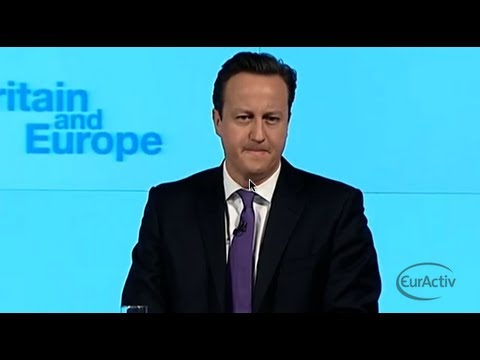
David Cameron Full Speech: Britain and Europe - January 23rd, 2013
0
Frankie Why posted on 2014/08/18Ever wondered about Britain's relationship with Europe? This speech from David Cameron dives deep into the European Union, the Eurozone crisis, and the Single Market, offering a fantastic chance to boost your advanced vocabulary and cultural understanding. You'll get insights into political discussions and pick up key terms related to international affairs!
Learn this video on the APP!
The VoiceTube App has more in-depth practice for videos!